India is taking fresh steps to strengthen its economic and industrial partnership with Egypt as Union Commerce and Industry Minister Piyush Goyal held high-level discussions with senior Egyptian ministers during his official visit to Cairo on November 15–16, 2026. The meetings focused on expanding bilateral trade, encouraging investment, developing infrastructure and creating new opportunities for Indian businesses in Egypt.
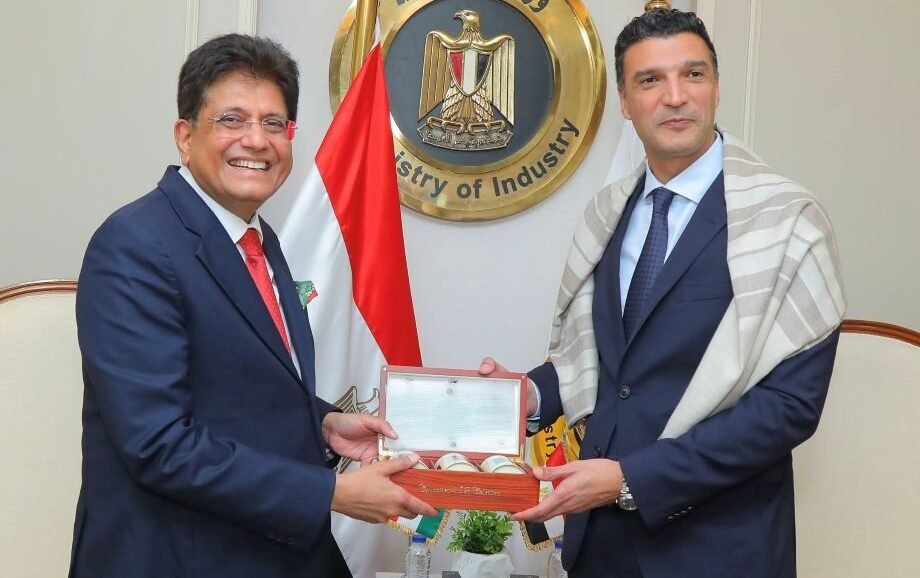
During his visit, Goyal met Egypt’s Minister of Industry, Khaled Hasham Ali Maher, to discuss ways to deepen industrial cooperation between the two countries. Both sides explored opportunities for joint manufacturing, technology partnerships, supply chain development and greater support for Indian companies operating in Egypt. The discussions also highlighted the potential for combining India’s manufacturing capabilities with Egypt’s industrial development priorities.
A key area of discussion was strengthening cooperation between small and medium-sized businesses. Both countries explored possibilities for sharing advanced manufacturing technologies, improving automation capabilities and supporting workforce training. These initiatives could help businesses improve productivity, develop technical expertise and participate in wider international supply chains. The discussions also examined how Egypt’s industrial policies could complement India’s Make in India initiative.
Goyal also held a separate meeting with Egypt’s Minister of Transport, Lt. Gen. Eng. Kamel Al-Wazir, to explore opportunities for cooperation in infrastructure and logistics. The discussions covered railways, highways, seaports and multimodal transportation networks. Both sides recognised the importance of efficient transport infrastructure in supporting international trade, improving connectivity and strengthening regional supply chains.
Egypt’s geographical position provides an important advantage for Indian companies seeking access to markets across Africa, Europe and the Middle East. Its location near the Suez Canal makes it a significant centre for international shipping and logistics. Greater cooperation in transport infrastructure and port development could therefore create additional opportunities for Indian businesses involved in engineering, construction, manufacturing and logistics.
The minister also participated in the India-Egypt Joint Business Council meeting alongside Egypt’s Minister of Investment and Foreign Trade, Mohamed Farid Saleh. During the interaction, Goyal highlighted the contribution of more than 700 registered Indian companies operating in Egypt and encouraged businesses from both countries to explore new investment and commercial opportunities. Pharmaceuticals, engineering, textiles and manufacturing were among the sectors identified for stronger cooperation.
Another important part of the visit was the seventh session of the India-Egypt Joint Trade Committee, co-chaired by Goyal and Saleh. The meeting was held at the ministerial level for the first time, reflecting the growing importance of economic engagement between the two countries. Both sides discussed reducing trade barriers, improving customs procedures, strengthening market access and promoting investment partnerships.
India and Egypt also agreed to establish a Joint Working Group to examine the possibility of a Preferential Trade Agreement or a Free Trade Agreement. The proposed framework aims to improve business access to both markets and support the expansion of bilateral trade. Both countries have set an ambitious target of increasing annual trade from approximately $6.5 billion to $12 billion.
The visit also included participation from a delegation of more than 130 Indian business leaders and start-ups, highlighting the growing role of private-sector partnerships in bilateral relations.
These developments reflect India’s broader efforts to strengthen economic engagement with strategically important international partners. Closer cooperation with Egypt in manufacturing, infrastructure, technology and trade could support investment growth, improve regional connectivity and create long-term commercial opportunities for both countries.