India and China have widened their military-level engagement along the Line of Actual Control by conducting a Corps Commander-level meeting in Arunachal Pradesh for the first time. The interaction took place on September 6 at the Wacha-Damai Border Personnel Meeting point in the Kibithoo sector, bringing senior military representatives together in one of the most strategically important areas of the eastern frontier.
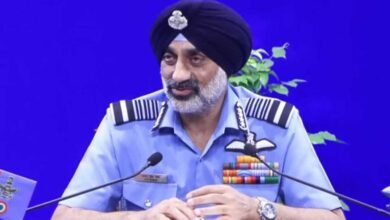
The Indian delegation was headed by Lieutenant General Girish Kalia, Commander of the Indian Army’s 3 Corps. The formation is responsible for military operations across important parts of the northeastern region and plays a key role in India’s defence posture along the eastern section of the LAC.
The meeting is important because direct Corps-level discussions between the two militaries have traditionally been concentrated in the Ladakh sector. Establishing the same level of engagement in Arunachal Pradesh gives commanders on both sides another avenue to communicate on developments taking place along the eastern frontier.
India and China continue to have unresolved differences over the boundary, with Arunachal Pradesh remaining particularly sensitive because Beijing claims the Indian state as part of what it calls “South Tibet.” New Delhi has consistently rejected China’s territorial claims and maintains that Arunachal Pradesh is an integral part of India.
The latest military engagement follows renewed diplomatic efforts between the two countries aimed at improving management of their border relationship. National Security Adviser Ajit Doval and Chinese Foreign Minister Wang Yi held the 25th round of Special Representatives’ talks in Beijing in August, where discussions covered the boundary question and measures aimed at maintaining peace and stability along the frontier.
Military-to-military communication has become increasingly important since the severe deterioration in India-China relations following the 2020 Ladakh border crisis. Although the two countries have subsequently taken steps to reduce tensions in some areas, the possibility of friction remains because of competing perceptions of the LAC and extensive military deployments on both sides.
The eastern sector presents its own operational challenges. The region’s mountainous terrain, difficult weather conditions and limited connectivity make border management considerably demanding. At the same time, improvements in roads, bridges, airfields and other infrastructure have increased the ability of both countries to sustain troops and equipment close to the frontier.
Against this backdrop, the Wacha-Damai meeting provides a dedicated platform for senior commanders to address military concerns directly. Such communication can help clarify developments on the ground, reduce the risk of miscalculation and provide a mechanism for dealing with situations before they develop into larger confrontations.
The talks also indicate that the India-China military dialogue is gradually becoming more geographically comprehensive. Rather than relying primarily on established mechanisms in the western sector, the two sides are now extending senior-level military communication to Arunachal Pradesh, where border sensitivities remain high.
Details of the discussions and any specific understandings reached during the meeting have not been publicly disclosed. However, the establishment of Corps Commander-level engagement in the eastern sector itself represents a notable development in India’s border-management strategy.
For New Delhi, maintaining strong military preparedness while keeping communication channels open remains central to managing the LAC. For Beijing, continued dialogue provides a mechanism to engage Indian commanders directly despite the two countries’ continuing disagreement over the boundary.
The Wacha-Damai meeting therefore represents more than another routine Border Personnel Meeting. It adds a senior command-level channel to the eastern sector and could become an important part of efforts by India and China to manage tensions, maintain stability and prevent local incidents along the LAC from escalating.
-
-
-

-