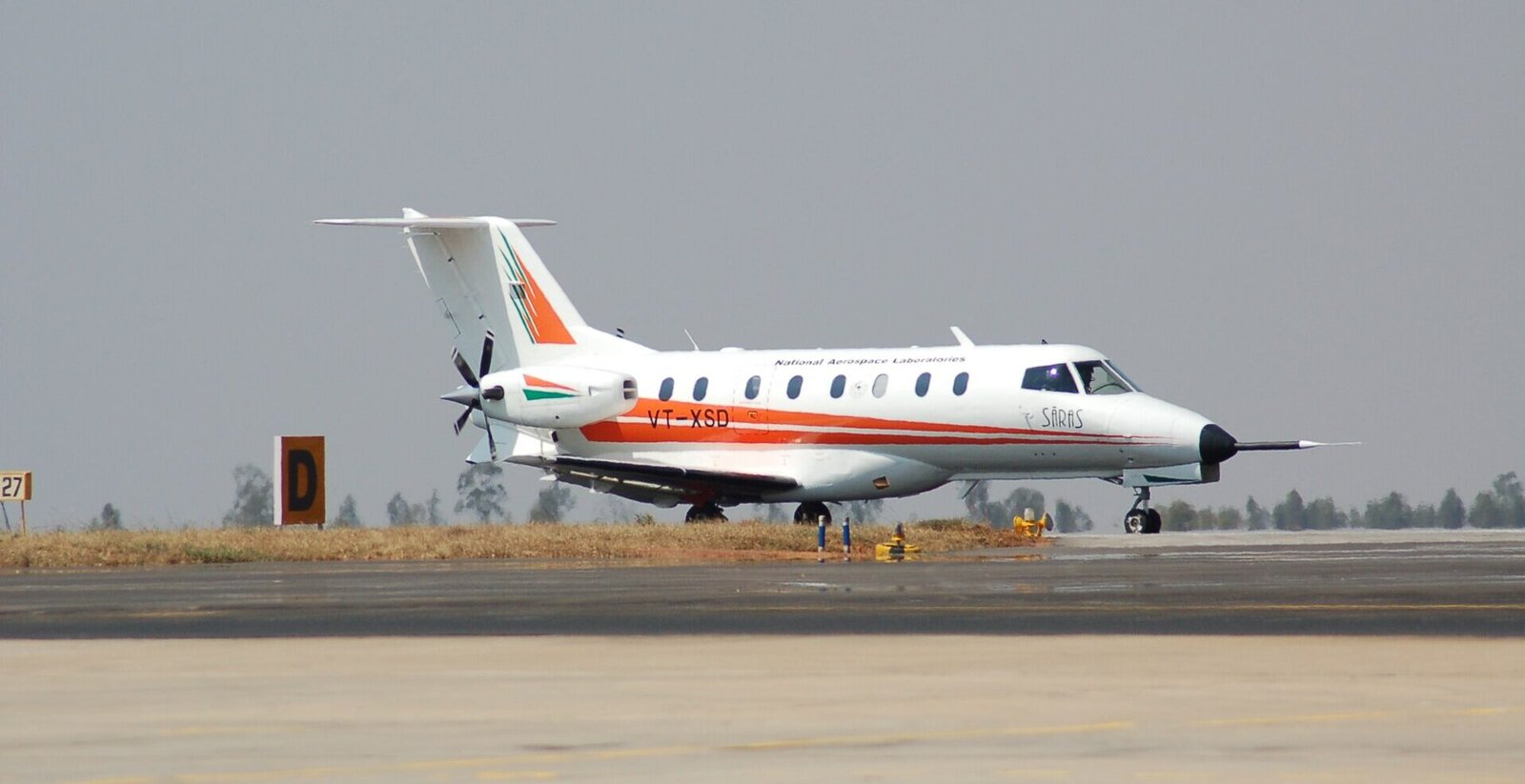
India is advancing development of the SARAS MK-II aircraft while the related Hansa-3-NG variant moves toward mass production, marking a significant step in the country’s indigenous transport and trainer aircraft capability.
The SARAS MK-II is a twin-turboprop, all-metal transport aircraft being developed under DRDO’s lead with HAL as the primary production partner. The upgraded variant incorporates enhanced avionics, improved payload capacity, and refined aerodynamic features compared to the earlier SARAS MK-I prototype that first flew in 2004.
The aircraft is positioned to fill a critical gap in India’s military and civilian transport fleet. It is designed for short-haul operations from unprepared airfields, a capability essential for the Indian Air Force’s operations in remote and mountainous regions, particularly in the Northeast and along India’s border areas.
The parallel progression of the Hansa-3-NG variant reflects India’s broader strategy to develop a family of indigenous aircraft to reduce dependence on foreign platforms. The Hansa series, also developed by DRDO and HAL, serves as a primary trainer and light transport platform for the IAF. The NG variant introduces modern avionics and improved performance characteristics.
Both programmes align with the government’s Make in India initiative and the stated objective of achieving technological self-reliance in aerospace manufacturing. India currently relies on foreign transport aircraft such as the C-130J Hercules and C-17 Globemaster III for strategic airlift. Indigenous platforms like SARAS and Hansa reduce operational costs and enhance supply chain security.
The SARAS programme has experienced multiple development cycles spanning nearly two decades. Early prototypes validated core design and structural concepts, while successive iterations addressed certification challenges and operational requirements identified by military users. The shift toward SARAS MK-II reflects lessons learned and incorporation of operator feedback from trials conducted with the IAF.
Production scaling of the Hansa-3-NG suggests HAL has achieved manufacturing readiness and component supplier maturity necessary for sustained output. This progression is typical of DRDO-led aircraft programmes, which typically transition from limited prototype batches to small series production before ramping industrial capacity.
The aircraft’s turboprop propulsion, rugged landing gear, and high-wing configuration enable operations from short, unpaved strips with minimal ground infrastructure. This makes both platforms valuable for humanitarian assistance, disaster relief, and remote area connectivity missions that form part of India’s civil aviation mandate.
India’s focus on transport and trainer platforms reflects recognition that fielding indigenous platforms in these categories is technologically achievable and operationally valuable, while advanced platforms like combat jets and maritime patrol aircraft remain under parallel development with longer timelines and higher technical complexity.
-

-

-

-