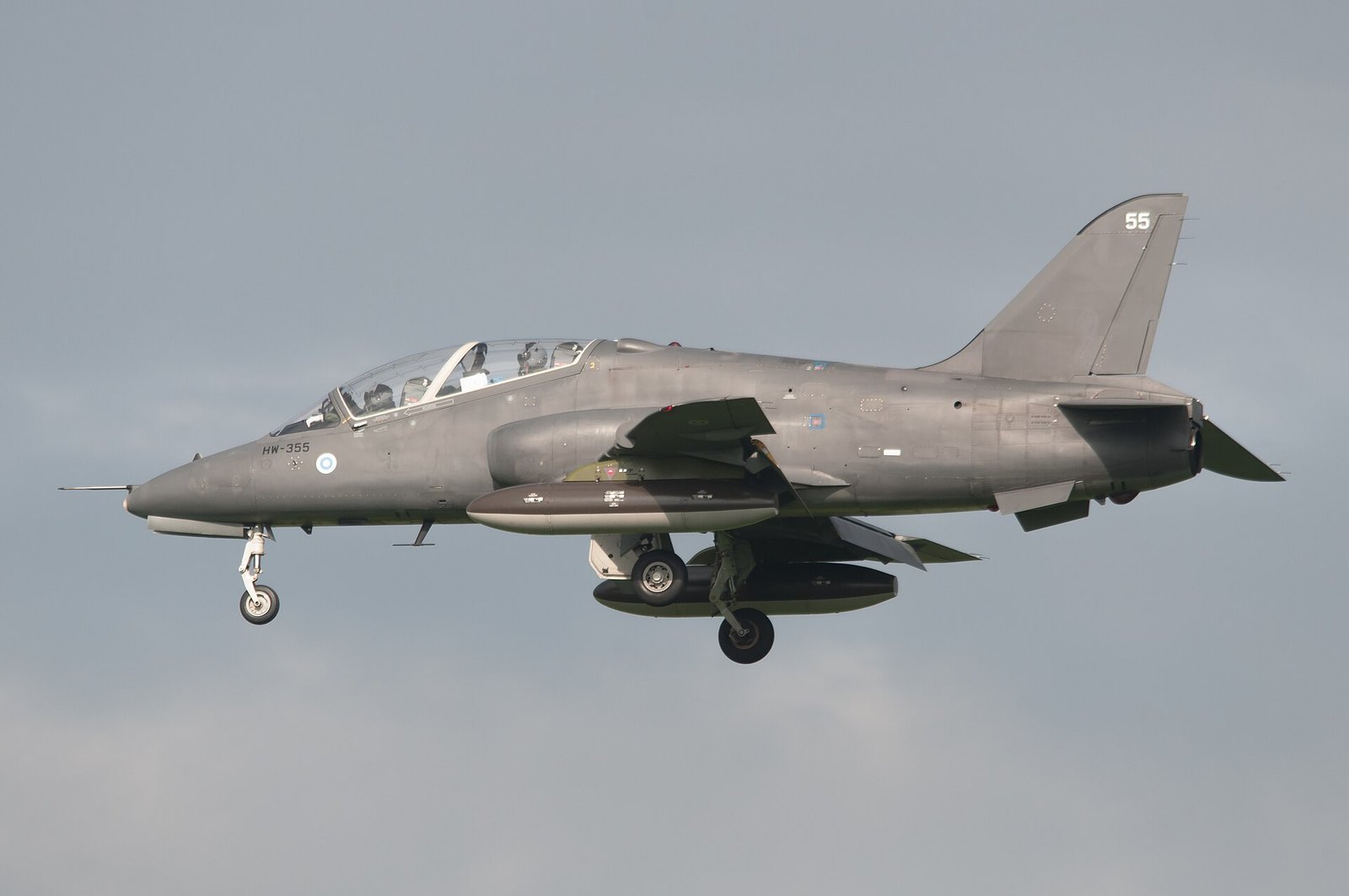
The Indian Air Force (IAF) has launched a major search for a new generation of advanced jet trainers to eventually replace its ageing Hawk Mk-132 fleet. The move is aimed at strengthening the final stage of fighter pilot training and preparing future pilots for increasingly sophisticated frontline combat aircraft.
The IAF is seeking information from Indian and international aerospace manufacturers for approximately 150 Stage-III (F) jet trainer aircraft along with associated training equipment and systems. The requirement represents an important step in the long-term modernisation of India’s fighter pilot training infrastructure.
The Hawk Mk-132 currently serves as the IAF’s Advanced Jet Trainer and provides the crucial transition between basic flying training and frontline fighter aircraft. The aircraft is manufactured in India by Hindustan Aeronautics Limited (HAL) under licence from the original British Hawk programme.
The replacement programme is expected to focus on a much more capable training platform. The next-generation aircraft will need to familiarise pilots with technologies and operational concepts found on modern combat aircraft, including advanced avionics, radar, electronic warfare systems, digital cockpit technologies and modern weapons employment.
The requirement comes at a time when the IAF is gradually introducing and developing more advanced combat aircraft, including the Rafale and Tejas, while also looking toward future platforms such as the Advanced Medium Combat Aircraft (AMCA). A modern lead-in fighter trainer will therefore be important in ensuring pilots are adequately prepared before moving to operational fighter squadrons.
The IAF’s information-gathering exercise is currently not a final procurement contract. Manufacturers are expected to provide details about their aircraft, technical capabilities, production arrangements, indigenous content and potential technology-transfer opportunities. The responses will help the IAF formulate the requirements for the next stage of the acquisition programme.
Potential aircraft that could attract interest include platforms such as Leonardo’s M-346 and Korea Aerospace Industries’ T-50 family. India’s HAL is also developing the HLFT-42, a lead-in fighter trainer concept that could potentially provide an indigenous solution if it meets the IAF’s operational and technical requirements.
A major focus of the programme is expected to be greater domestic participation. An Indian production and technology-transfer component could help strengthen the country’s aerospace manufacturing ecosystem while reducing dependence on overseas suppliers over the long term.
The Hawk Mk-132 has played a significant role in India’s fighter pilot training system for years. Replacing it will therefore be more than a routine aircraft acquisition. The programme could reshape how the IAF prepares pilots for the increasingly complex aircraft and weapons systems they will encounter during their operational careers.
The replacement process is expected to take several years, as the IAF will first evaluate industry responses before moving toward detailed specifications, trials and a formal procurement process. Until a new aircraft is selected and inducted, the Hawk Mk-132 will continue to remain an important part of the IAF’s advanced pilot training pipeline.
-

-
-

-