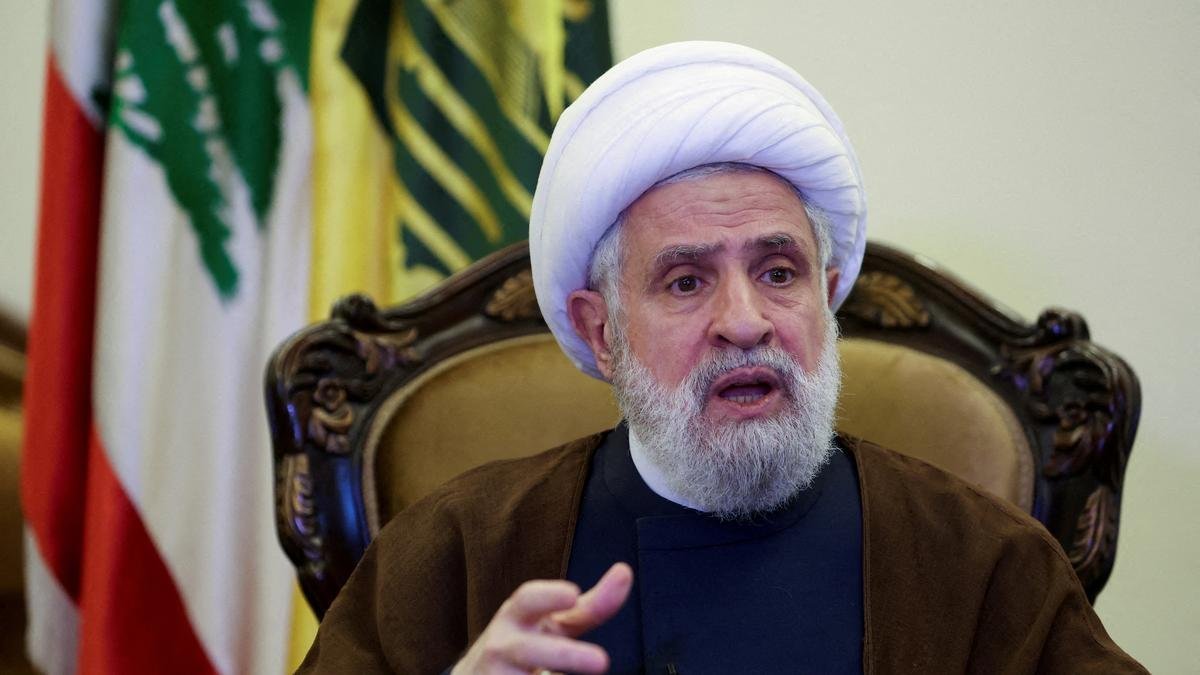
Hezbollah’s chief has rejected any proposal for an Israeli-controlled security zone in Lebanese territory, according to reports citing statements from the militant group’s leadership. The organization has warned of armed resistance to any such arrangement, escalating rhetoric amid ongoing regional tensions.
The rejection underscores the hardening positions between Israel and Hezbollah, a designated terrorist organization by multiple Western nations that maintains significant military capabilities and territorial control in southern Lebanon. The group’s warning signals willingness to deploy its armed wing against Israeli security measures that extend into Lebanese airspace or territory.
Hezbollah operates a substantial military infrastructure across southern Lebanon, including anti-tank guided missile systems, rocket batteries, and drone capabilities developed with Iranian support. The organization has clashed repeatedly with Israeli forces along the Lebanon-Israel border, with periodic exchanges of fire and targeted strikes by both sides creating cycles of escalation and fragile de-escalation over the past decade.
The current dispute over a potential security zone reflects competing visions for border security. Israel has historically sought to establish buffer zones or demilitarized areas to prevent cross-border attacks, while Hezbollah and the Lebanese government view such measures as violations of national sovereignty. Previous arrangements, including UN-brokered ceasefires and the presence of international peacekeeping forces like UNIFIL, have proven difficult to enforce.
Any Israeli military operation or security enforcement mechanism in Lebanese territory would likely face resistance not only from Hezbollah but also from Lebanese state institutions, creating a complex security environment. The group’s warning suggests it views a security zone as a provocative escalation that justifies an armed response rather than diplomatic negotiation.
The standoff carries implications for regional stability, particularly given Hezbollah’s interconnected relationship with Iran’s Islamic Revolutionary Guards Corps and its role as a key actor in Syria’s conflict. Attempts to establish unilateral Israeli security measures without Lebanese government consent risk deepening the cycle of cross-border strikes and counter-strikes that has defined the Israel-Lebanon dynamic for decades.
-

-

-

-