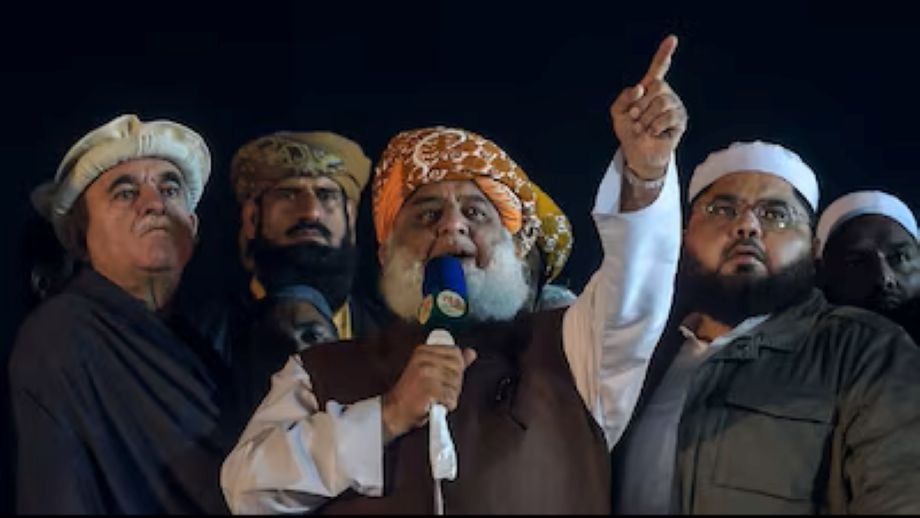
Pakistan’s veteran religious and political leader Maulana Fazlur Rehman has launched one of his strongest public attacks on the Pakistan Army, alleging that it abandoned its own soldiers during the 1999 Kargil War and failed to acknowledge those killed in the conflict.
Speaking at a public gathering, the Jamiat Ulema-e-Islam (F) chief criticised Pakistan’s military leadership, claiming that soldiers who lost their lives during the Kargil conflict were left behind, forcing the Indian Army to recover and bury several of the bodies with military honours after Pakistan allegedly declined to accept them. His remarks have revived a long-standing controversy surrounding Pakistan’s handling of casualties during the war.
Fazlur Rehman questioned the army’s treatment of its own personnel and argued that the sacrifices of soldiers should never be overshadowed by political or institutional interests. He also accused Pakistan’s military establishment of failing to publicly disclose the complete list of personnel killed during the conflict, suggesting that many families continue to seek answers decades after the war.
The Kargil War erupted in 1999 after Pakistani troops and armed infiltrators occupied strategic heights on the Indian side of the Line of Control (LoC). India responded with Operation Vijay, eventually recapturing the occupied positions after weeks of intense fighting in difficult mountainous terrain. The conflict claimed the lives of hundreds of soldiers on both sides and remains one of South Asia’s most significant military confrontations.
Historical accounts have documented that several Pakistani soldiers killed during the conflict were buried by the Indian Army after Pakistan initially refused to acknowledge them as regular military personnel. Families of some of those soldiers are still reportedly awaiting the return of their relatives’ remains, nearly three decades after the war.
Rehman’s latest remarks have gained significant attention in Pakistan because criticism of the military from senior political figures remains relatively uncommon. Analysts believe the statement could intensify domestic debate over the Pakistan Army’s role during the Kargil conflict and renew questions about transparency in military decision-making.
The comments also coincide with commemorations surrounding Kargil Vijay Diwas in India, where the sacrifices of Indian Armed Forces personnel are remembered annually. The renewed discussion has once again brought the human cost of the 1999 conflict into focus, highlighting unresolved issues that continue to resonate on both sides of the border.
-
-
-

-