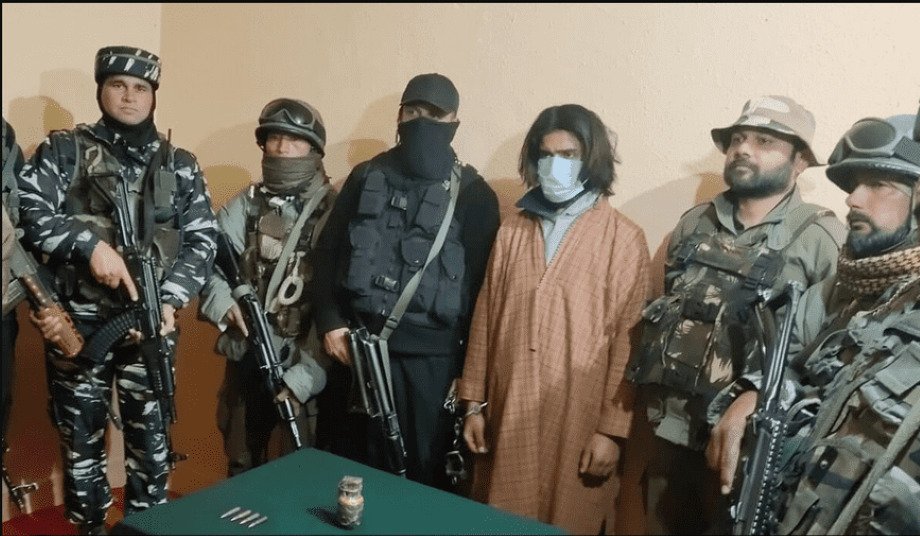
Security forces have arrested eight overground workers (OGWs) linked to terrorist outfits during a series of counter-terrorism operations across Kashmir, officials said.
The arrests form part of the sustained crackdown that Jammu and Kashmir Police, working alongside the Army and central paramilitary forces, has maintained on the militant support network operating in the Valley.
Who are Overground Workers
Overground workers, according to Indian security forces, are people who help militants with logistical support, cash, shelter, and other infrastructure with which armed groups and insurgency movements such as Hizbul Mujahideen and Jaish-e-Muhammad in Jammu and Kashmir can operate. They form the invisible backbone that keeps active militant cadres functional.
OGWs play a vital role in militant attacks, providing real-time information and support to the tactical elements. Over ground workers have diversified into other roles such as stone-pelting, mob-rioting, ideological support, radicalisation, and recruitment of militants.
Security agencies classify OGWs by the level of threat they pose, ranging from those who provide direct logistical support to strike teams down to those managing funding, radicalisation and recruitment for terror groups. This graded approach allows police to prioritise arrests of the most dangerous facilitators while counselling minor sympathisers.
Part of a Wider Crackdown
The action comes against the backdrop of an intensified security posture in Kashmir since the 2025 Pahalgam terror attack. Following that attack, hundreds of former overground workers and ex-militants were interrogated in Kashmir as agencies mapped the support networks behind Lashkar-e-Taiba and its proxy The Resistance Front.
Investigations since then have repeatedly shown how local facilitators, sometimes students, shopkeepers or seasonal workers, provide shelter and logistics to armed cadres operating in South and North Kashmir. Dismantling this civilian support structure remains as central to counter-insurgency strategy as neutralising armed militants themselves.
Jammu and Kashmir Police’s Special Operations Group, a dedicated tactical unit built specifically for anti-militancy work, typically spearheads such identification and arrest drives in coordination with the Army’s Rashtriya Rifles and the CRPF. Continued pressure on OGW networks is seen by security planners as essential to choking the flow of arms, funds and intelligence that sustains residual militancy in the Union Territory.
-
-

-
-