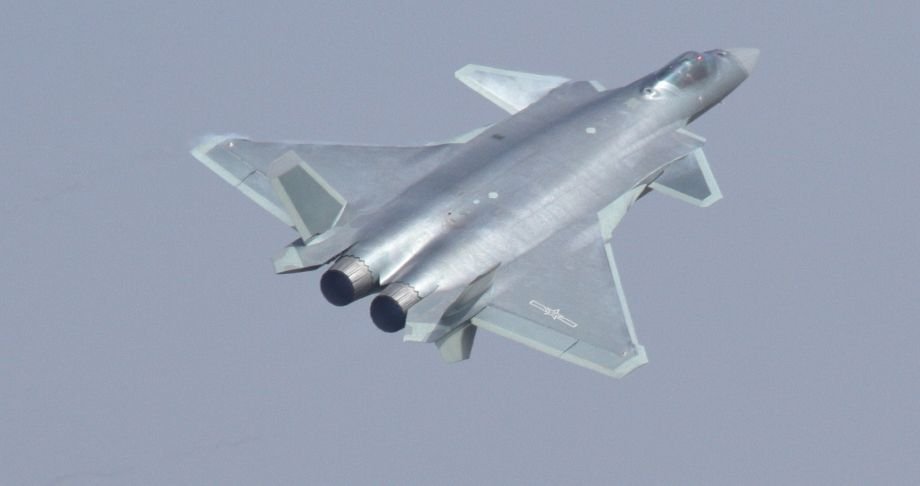

China Deploys 11 J-20 Stealth Fighters Near LAC, Reshaping Regional Airpower

China has expanded its J-20 stealth fighter deployments along the India-China border, with multiple aircraft now stationed at forward airbases in Hotan and Damxung, according to recent assessments. This concentration marks a significant shift in the air combat posture across the contested frontier.

The J-20, China’s fifth-generation fighter programme, represents a major advancement in the People’s Liberation Army Air Force’s inventory. Developed by Chengdu Aircraft Corporation, the aircraft has undergone continuous refinements to its aerodynamics, avionics and sensor fusion architecture, making it one of the PLAAF’s most capable combat platforms.

Designed for long-range operations, the J-20 enables China to project air power deep into strategically important areas while maintaining a high degree of operational flexibility. Its advanced radar, infrared search and track systems, and sophisticated electronic warfare suite make it a formidable asset in contested airspace where air superiority is critical.

India’s primary response to the J-20 relies on the Indian Air Force’s existing fleet of advanced fighter aircraft, including the HAL Tejas Mk1A, Rafale and Su-30MKI. While the Tejas represents a significant milestone in India’s indigenous aerospace programme, the country’s fifth-generation capability is still under development through the Defence Research and Development Organisation’s Advanced Medium Combat Aircraft (AMCA) programme.

The Indian Air Force has also prioritised the acquisition of additional advanced fighter aircraft under the Multi-Role Fighter Aircraft (MRFA) programme to strengthen its future combat capabilities while complementing indigenous development efforts.

Hotan Air Base in Xinjiang serves as a key forward operating location for the People’s Liberation Army Air Force, while Damxung Air Base in the Tibet Autonomous Region provides strategic depth and logistical support for operations facing India. Both facilities have undergone infrastructure upgrades in recent years to support sustained combat aircraft operations.

India’s air defence network along its northern frontier includes integrated radar systems and advanced surface-to-air missile platforms such as the S-400 and the indigenous Akash missile system. The Indian Air Force also relies on airborne early warning assets, including the Netra AEW&C aircraft, alongside an extensive ground-based surveillance network to maintain situational awareness.

The expanded deployment highlights the continuing strategic competition in military aviation as both China and India modernise their air combat capabilities. New Delhi remains focused on strengthening its indigenous aerospace industry, enhancing air defence infrastructure and accelerating future fighter aircraft programmes to maintain a credible deterrence posture.

Exit mobile version