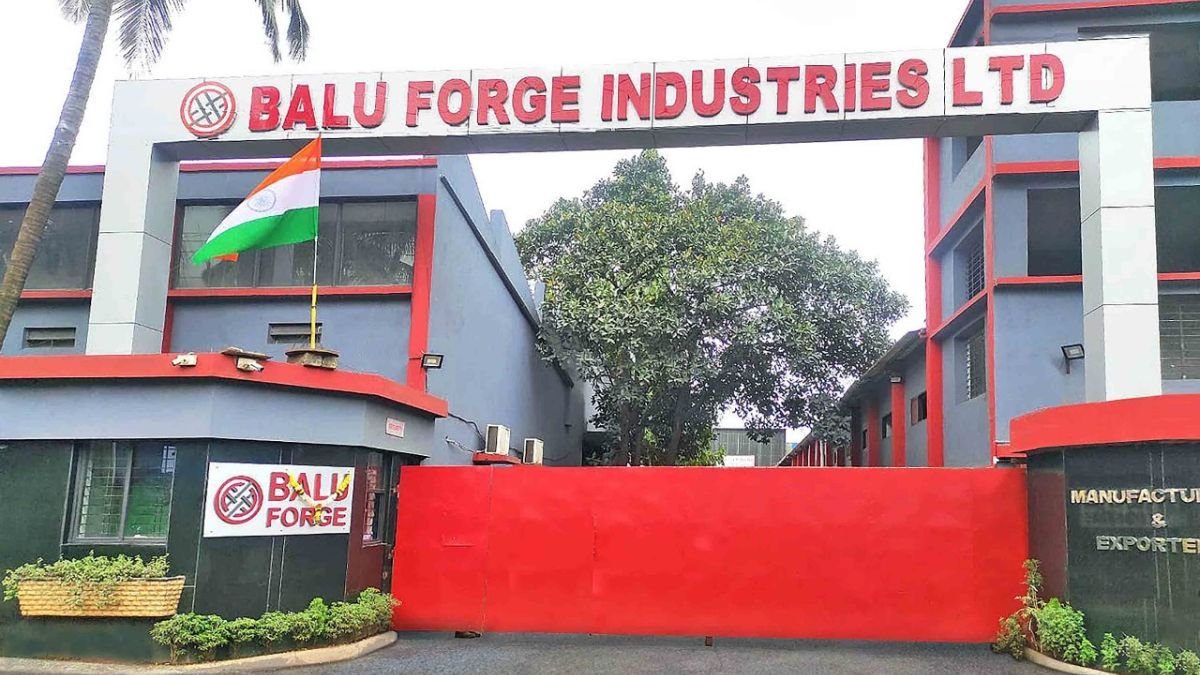
Balu Forge Industries Ltd has secured a landmark contract for the production of indigenous 152mm artillery shells, marking a significant advancement in India’s domestic defence manufacturing capability and forward integration in the ordnance sector.
The order represents a major milestone for the private sector manufacturer as it expands capacity for one of the Indian Army’s most widely used indirect fire munitions. The 152mm platform remains the backbone of India’s divisional and corps-level artillery architecture across multiple weapon systems.
The 152mm shell family has been in service with the Indian Army for decades, with production historically centred at Ordnance Factory Board (OFB) facilities. The platform fires high-explosive and smoke rounds with effective ranges extending beyond 30 kilometres depending on the gun variant. The ammunition serves across towed gun systems and self-propelled platforms including the M46 and M109 self-propelled howitzer.
This contract reflects the Indian Ministry of Defence’s stated commitment to diversify ordnance production beyond OFB and accelerate private sector participation in ammunition manufacturing. The initiative aligns with the Defence Ministry’s tiered approach to industrial base expansion, particularly in sectors where domestic production has faced capacity constraints.
Balu Forge’s entry into large-scale 152mm shell manufacture also addresses the long-standing gap between peacetime and wartime ammunition consumption rates. Historical operational experience has underscored the criticality of surge production capability, particularly following the 1999 Kargil conflict when artillery consumption rates far exceeded peacetime stockpile assumptions.
The contract validates the growing credibility of India’s private defence industrial base in manufacturing high-tolerance metallurgical products. Artillery shell production demands precision engineering across forging, machining, and quality assurance to ensure safe and reliable performance in combat conditions. The manufacturing process encompasses fuze cavity precision, explosive fill consistency, and ballistic coefficient uniformity.
OFB’s historical monopoly on 152mm production had created both supply certainty and structural inefficiencies. Multi-vendor production models, now being implemented across ammunition categories, are expected to enhance competition and enable faster technology refresh cycles aligned with evolving artillery tactics and fire control systems.
This development also supports India’s stated objective to emerge as a net exporter of defence equipment. Indigenous ammunition manufacturing platforms, once scaled and validated, position India for potential export orders in allied nations using compatible gun systems across South Asia, Africa, and Southeast Asia.
-

-

-

-