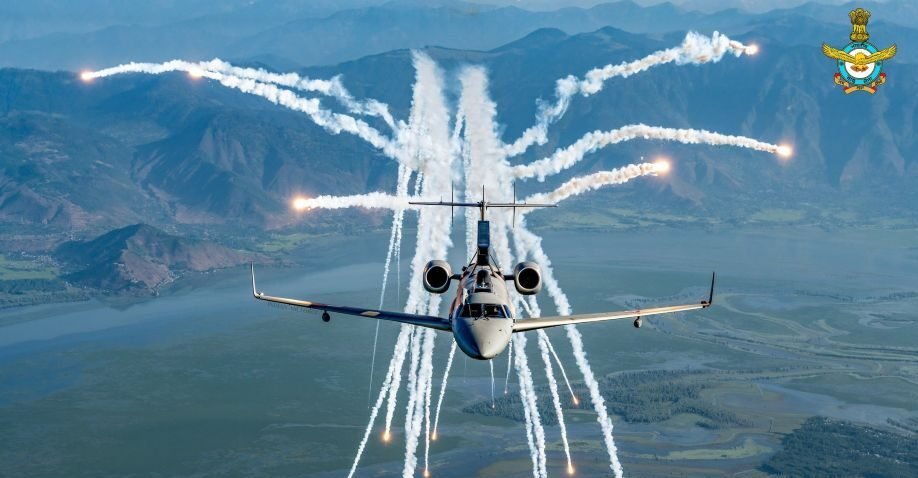

Adani Defence, DRDO Partner on Next-Generation AEW&C System for IAF

Adani Defence and Aerospace has partnered with the Defence Research and Development Organisation (DRDO) to develop a next-generation Airborne Early Warning and Control (AEW&C) system for the Indian Air Force, marking a significant step in India’s indigenous combat air capabilities.

The collaboration represents the second major AEW&C initiative underway, complementing the IAF’s existing Phalcon-based systems and signalling accelerated movement on the AEW&C Mk II programme that aims to equip India’s fighter squadrons with homegrown surveillance platforms.

India’s AEW&C ecosystem has evolved substantially over the past two decades. The IAF currently operates three Phalcon AEW&C aircraft mounted on Ilyushin IL-76 transport platforms, procured from Israel. These systems provide long-range air defence surveillance across the subcontinent and have been battle-tested in multiple operational deployments.

However, platform limitations and operational costs have long driven India’s push for indigenous AEW&C solutions. The Mk II programme seeks to mount an advanced phased-array radar and integrated command centre on a modern, fuel-efficient airframe. An Airbus A321 narrowbody aircraft is being evaluated as the baseline platform for this system.

DRDO’s Centre for Airborne Systems (CABS) in Bengaluru has substantial experience in radar development and integration, having successfully developed indigenous airborne surveillance technologies. This institutional capability will be critical for developing the sensor suite and signal processing architecture for the advanced AEW&C platform.

Adani Defence’s entry into AEW&C development reflects the broader strategy of expanding private-sector participation in complex defence manufacturing. The company has emerged as a significant player in aerospace and defence through its subsidiaries and joint ventures, with interests spanning missile systems, unmanned platforms, advanced composites, and defence electronics.

An advanced AEW&C system would provide real-time air picture generation, tracking of multiple targets over extended ranges, and automated threat assessment for India’s integrated air defence network. Modern systems can conduct persistent airborne surveillance while remaining at safe stand-off distances, significantly enhancing situational awareness and command-and-control capabilities.

The success of this programme is expected to strengthen India’s operational posture along its contested borders. A reliable indigenous AEW&C capability will reduce dependence on imported platforms, improve operational flexibility, and help establish a domestic ecosystem capable of developing future variants for the Indian Armed Forces.

Exit mobile version